
MORIAH LINTON
What $10,000
Can’t Buy
For many founders, the real value begins
after the funding arrives.
BY JACKELYN GILL
Managing Editor, WXN Media
Congratulations—you’ve just received a $10,000 grant!
Getting to this stage was hard. You built the business. You made the pitch. You’ve fought for every hard-earned and hard-won dollar. You’ve even made plans for how to spend it.
But what actually happens two days from now? Two months? Two years?
For women business owners like Liz Cripps, founder of WACADS Group, those answers aren't always so clear.
The cash investment she received from the BMO For Women Celebrating Women Grant in 2024 was a welcome infusion. But it wouldn’t solve the credibility roadblocks she faced scaling her smart automation technology business beyond narrowly scoped SMB projects into larger-scale, complex contracts with enterprise-sized clients.
That ambition required more. Which is why Moriah Linton, Head of BMO For Women, turned to the observations she made from sitting beside women entrepreneurs over 15 years at events, pitch competitions, and speaking opportunities.
“What actually helps elevate and helps grow and support these women?
It's not the $10,000. It's the network, it's the connections, it's the education,” she says.
That’s the real currency. And Moriah knew that if she built her program around it, the difference would be felt in ways no grant could measure.
“I see it time and time and time again,” she says. “The second a female business owner realizes that she's not alone, everything changes.”
The Women Who Stayed
The cycle kept repeating. A sponsor arrived at an event. They splashed
their logo across the room. A representative stood up and gave a keynote. Then—poof. Gone.
One group of women, however, showed up and didn’t leave. And that group kept getting bigger and bigger.
Moriah and her now-executive sponsor Sheri Griffiths were two of those women. "People noticed that we were there. So we started to realize the power in that,” Moriah says. “If we show up, and we keep showing up, it really matters.”
The more she showed up and the longer she did it, the more she noticed women entrepreneurs were wrestling with the same things, regardless of industry—and not just hiring, firing, finding clients, and managing supply chains.
“The second a female business owner realizes that she's not alone, everything changes."
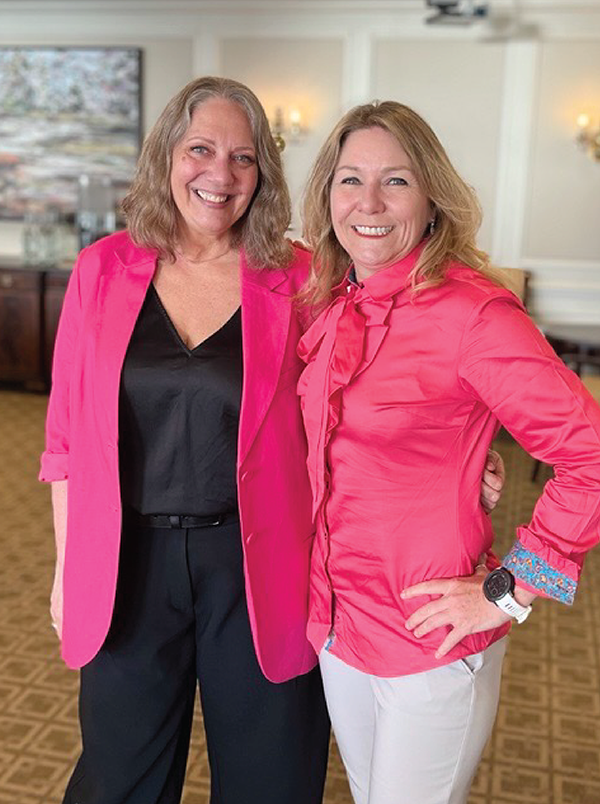
Moriah Linton, Head of BMO For Women
She noticed how alone they felt. “We would talk about anything. It doesn't have to be business. It could be, 'You know what really sucks? I'm trying to run my business, and I've got stuff going on at home, too.'"
Some topics, like managing a business while managing hot flashes and brain fog, were simply things female entrepreneurs didn’t feel comfortable discussing with their own families and employees, let alone their banker.
Then there was the research. In a collaboration with Carleton University, The BMO for Women team dug into the question of decision-making in women-owned businesses. And the results showed, “She needs to do more due diligence than her male counterpart. She needs more questions answered,” Moriah says. “She needs to make sure that her family is going to be okay, her employees are going to be okay, and the community is going to be okay.”
These weren’t conversations banks were used to having. “Traditionally speaking, banks deal with male businesses. That's just the way it's been for a really long time, and it's hard to shift the needle.”
Yet that's exactly the kind of support Moriah found herself providing, simply by being present.
Not On Her Watch
But she couldn’t show up for it alone. She learned that the hard way.
First, there was the demand on her time. “I was going to events, left, right, and center constantly. It was quite overwhelming,” she says. Then there were the obvious physical limitations. “I can't jump on a plane to Winnipeg and go to an event.”
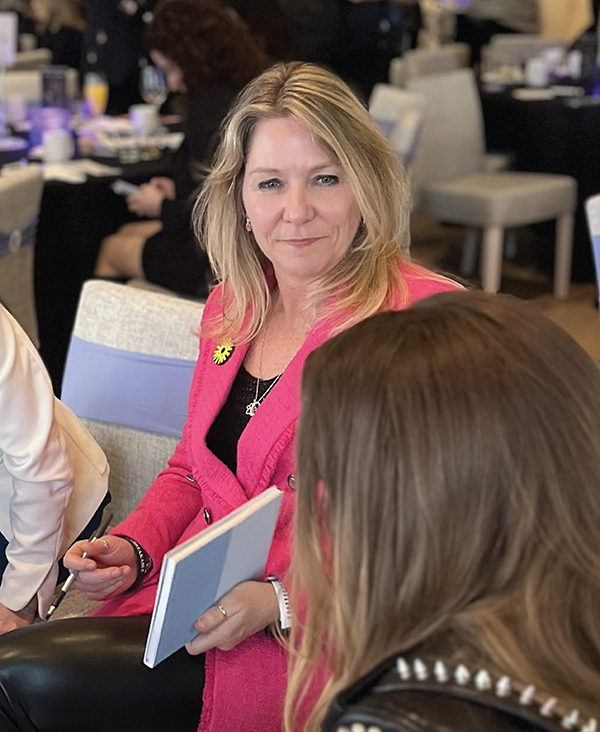
It came to a head 10 years ago when an email arrived in her inbox. It was a lead on a female business owner in Calgary who wanted to switch banks. Did Moriah know anyone who could help?
She didn’t. She asked around. She found a name. She sent it. And then she felt the knot in her stomach. “I felt like I had to follow up. I was worried,” she says. What if they didn’t understand women business owners the way she did?
Moriah wasn’t satisfied with repeating that situation. She wanted confidence that every connection would receive a consistent experience, and that’s hard to do with over 50,000 employees across the country.
She imagined what a better network of support might look like. People with an existing track record of helping women-led businesses. Participation in local communities. Strong proof of performance. The capacity and drive to do more.
That list of criteria led to the BMO For Women Advocate accreditation program. Since its launch in 2022, over 50 business and commercial bankers across Canada have accepted the challenge and earned their badge.
And that $10,000 grant is no longer a standalone offer. “We decided, let's bring them together. Because the one thing is, entrepreneurship is lonely,” she says. In 2024, she launched a two-day summit alongside the grant to create a sense of community. “That happened almost immediately. They now support each other. They have their own chat group.”
No more knots in her stomach. “I feel good because we created that,” she says.
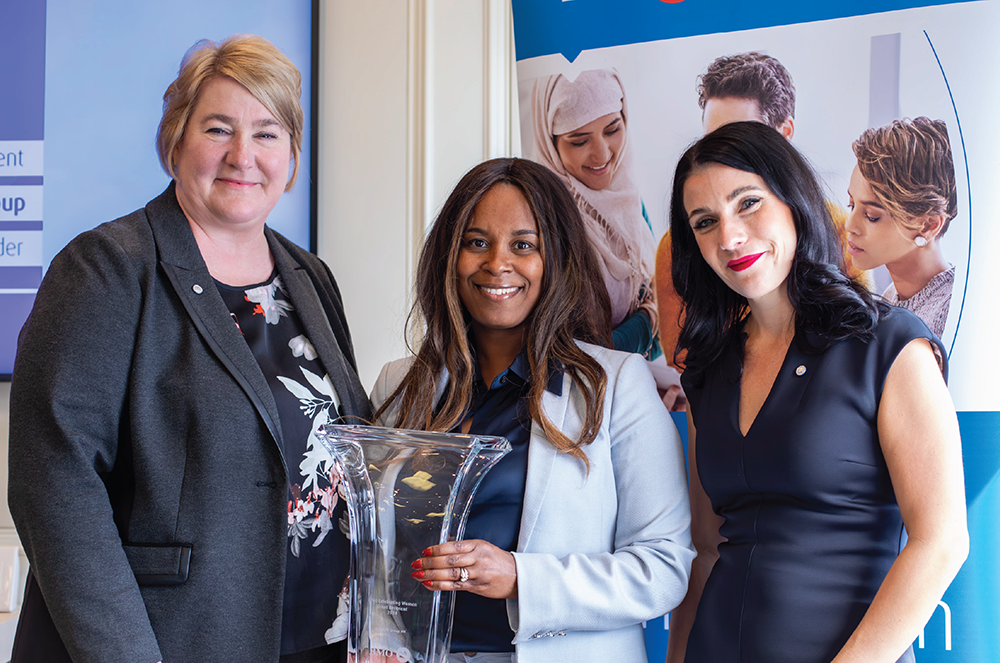
Sheri Griffiths, Senior Vice President, Head of Ontario, Corporate Finance, BMO and WXN Top 100 Award Winner; Liz Cripps, Founder, WACADS Group and BMO grant recipient; and Ashley Salazar, Head, Industry Initiatives & Partnerships, BMO and WXN Top 100 Award Winner
After The Win
Liz was at that inaugural BMO Celebrating Women Grant Summit.
She was building something ambitious: custom AI solutions grounded in ethical technology. "However," Moriah says, "it's difficult to compete with larger firms with equally large marketing budgets and investors."
Most of Liz’s work was with smaller clients, delivering single projects. In Liz’s own words, "Meaningful … but not yet operating at the scale or complexity we handle today."
She wanted to build enterprise-grade ecosystems, the kind of work that required trust, credibility, and a network she didn't yet have. “I didn't have the operational bandwidth or the infrastructure to expand my team at that level,” explains Liz.
What followed was an introduction to GroYourBiz, a peer advisory group that functions like a board of directors for small businesses. An Advocate who kept following up as a trusted partner. Institutional credibility from a major financial player.
With that support, Liz was able to bring in additional talent to her team, enough to cover demand seven days a week, with faster turnaround times and more complex tasks. In other words, stability, structure, and credibility, she says. "The scale of our growth shifted dramatically. We’re now winning RFPs to build large scale, enterprise grade platforms that integrate multiple advanced technologies.”
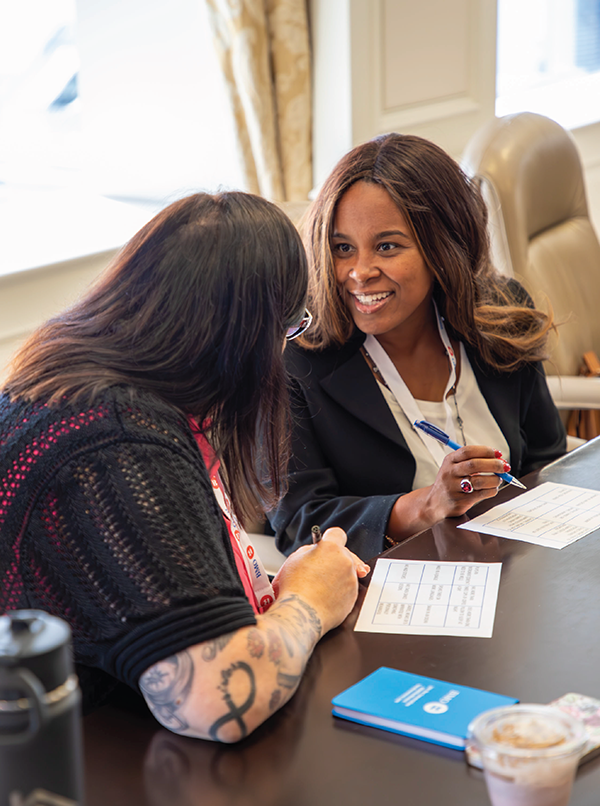
Liz Cripps, Founder of WACADS Group
Still Showing Up
Ten years in, the program has awarded more than $1 million in grants, recognized more than 375 women entrepreneurs across North America, and built an advocate network that continues to grow year after year.
This year, Moriah and her team are marking the milestone with an eight-city tour, bringing those conversations, connections, and resources directly into communities across the country.
But for Moriah, the impact of BMO For Women can be measured in more than grants awarded or entrepreneurs recognized.
They're found in businesses like WACADS Group. In founders like Liz who secure a contract. In the entrepreneur who finds a trusted advisor. In the realization that support exists beyond the check itself.
"Consistency and showing up earn the trust needed to have more candid conversations in both directions," she says.
And perhaps that's the real value of support: not simply providing capital but creating the conditions for women to grow.