
PATRICIA GAGIC
The art of
becoming iconic
A story of what it takes to be a bold master -
no matter what path you choose to take.
BY JACKELYN GILL
Managing Editor, WXN Media
It’s one thing to snap a photograph as evocative as The Path. A lone figure silhouetted as he walks down an empty country road, head bowed and wind whipping his long hair and coat to one side. Leafless trees peek from behind a curtain of mist. The image is striking, lonely, somewhere between sadness and quietness.
It’s another thing entirely for that image to make it into the Carrousel du Louvre in Paris, chosen from a pool of 60,000 submissions by the world’s top photographers for the Salon des Beaux Arts.
So, imagine the surprise of Patricia Gagic, a world-renowned abstract painter and contemporary artist, when she was named the gold medal winner in 2018. “I was the first Canadian woman to receive the honour since the inception of the photography category,” she says.
And it didn’t stop there. Her shelves are lined with accolades, including three medals from the Societe Academique Arts-Sciences-Lettres. She has shown her work in Switzerland, Germany, France, Austria, the U.K., South Korea, the U.S., and Canada. She’s a Dame of the International Order of Saint George and joined the Canada’s Most Powerful Women: Top 100 Hall of Fame in 2018.
It reads like the CV of a master. But mastery, as Patricia sees it, isn’t about raw talent or luck. It’s about persisting. It’s a commitment to growth that never lets up.
“To be complete as a master, your foot is never off the gas pedal. It just taps the brake when it needs to,” she says. “It doesn’t matter what your industry is or what your job choice is. It’s your commitment to excel.”
The making of a master
Patricia was shocked at the scene unfolding in front of her. Maestro Dragan Dragic—a painter whose name she just learned was in the same sphere as Picasso—was silently slicing her paintings into squares.
Patricia and her husband, Ned, had arrived at Dragic’s home in Provence two hours behind schedule. “I don’t speak French. He doesn’t speak English. I’m having tea. He wants us out of the house,” she remembers. “I just wanted to pass out.”
“That truly was a spark for me,” she says. “Getting kicked out of school, having the desire I did, made me realize I didn’t have any guidelines around me.”
So, Patricia could be excused for thinking Dragic was less than impressed with her or her work.
But she had been preparing for this moment since she entered her first art competition in grade five, drawing and redrawing a woman’s portrait from the back of a magazine until she got it just right. Even as a little girl, she admired the likes of Jackson Pollock, finding the math and language in his signature swirls and splashes of colour.
Despite her obvious talent, she pursued a career in banking “to pay the bills,” and later in property management. Still, art pulled at her until, in her 40s, she enrolled in—and was asked to leave—the Dundas Valley School of Art at McMaster. She sought credibility and professionalism to advance her hobby into something more, but she was too far ahead of her peers.
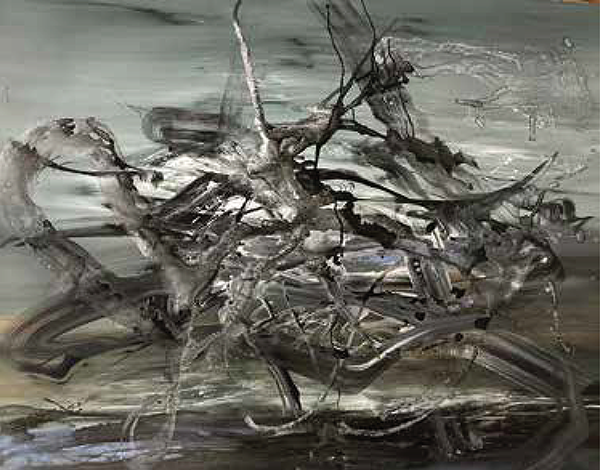
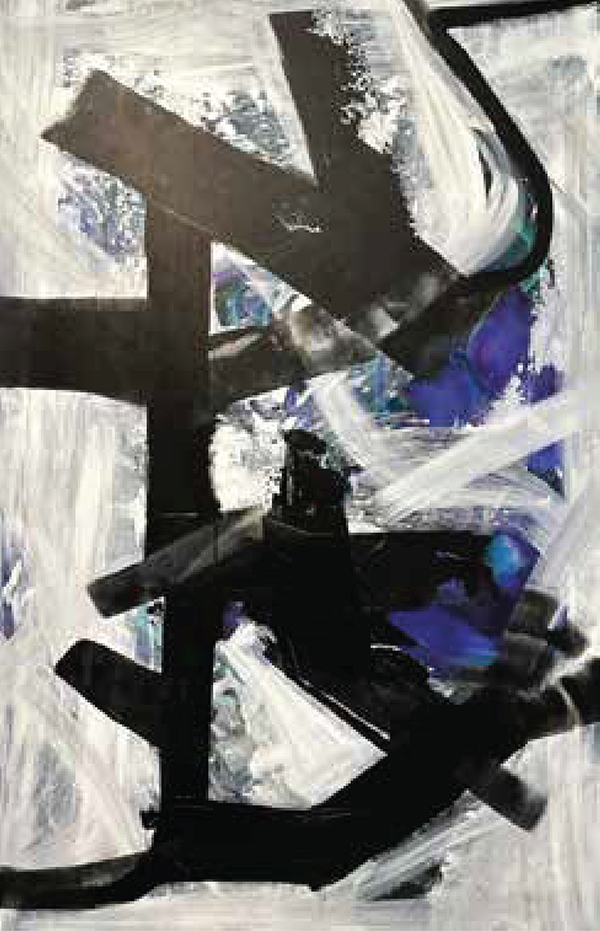
“That truly was a spark for me,” she says. “Getting kicked out of school, having the desire I did, made me realize I didn’t have any guidelines around me.”
That was about to change. Just before a trip to France—a surprise planned by her husband, Ned— Patricia couldn’t take her eyes off a painting of a white horse in abstract. The artist’s name: Dragic. “I got it in my head that [JG1.1]I wanted to meet him.” So, they added a visit to their itinerary.
The feeling between Patricia and Dragic wasn’t mutual, at least not at first. But with 30 newly clipped squares in front of him, each a painting in itself, Dragic surprised her: he offered to teach her. The terms? Learn French and forget everything else. Tabula rasa.
“He didn't want to have a student. And I was a challenge,” Patricia says. “He told my husband, I really did not know what to do with her. But I could see her passion. I could see her brain. And I knew I was also supposed to do this.”
“To be complete as a master, your foot is never off the gas pedal. It just taps the brake when it needs to,” she says. “It doesn’t matter what your industry is or what your job choice is. It’s your commitment to excel.”
Under his tutelage, she worked through the night to recreate his works in pastel with just four colors. She spent all day mixing paint to recreate a specific shade of creamy white. She even flew to France for just one evening to see him at a show in Avignon. “Because he asked me to be there,” she says. “He tested me with, are you serious enough that you will do whatever it takes?” [JG2.1]
She was. She devoted herself to the work. Years later, after she made her name as a transcendental impressionist inspired by sky, water, music, meditation, and more, one moment meant more than any award: when the Maestro called her Maestro, too. “Nothing is as memorable as that minute.
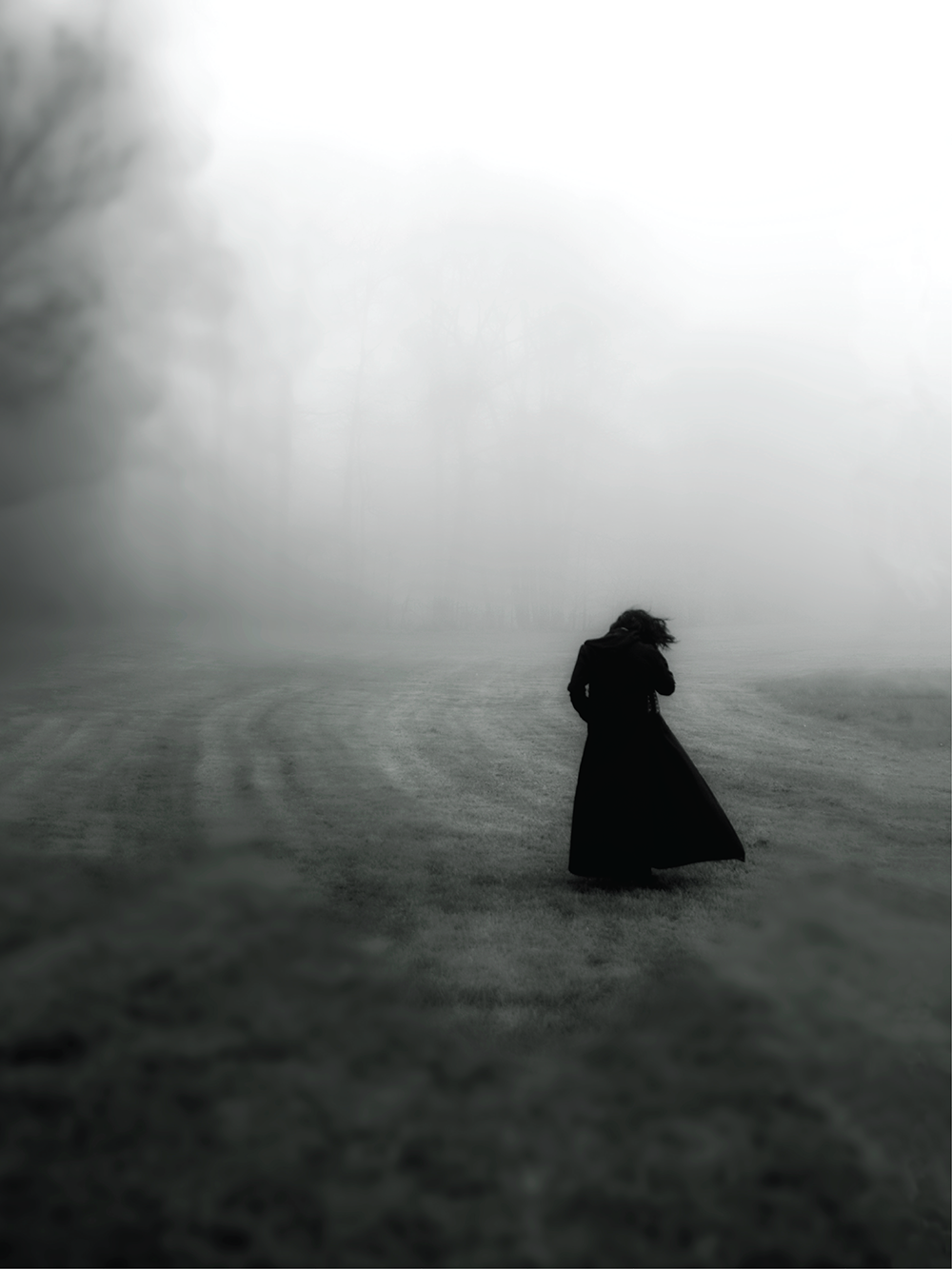
“The Path” Photograph
Received the Gold Medal in Photography 2018 from the Société Nationale des Beaux-Arts (SNBA)
at the Carrousel du Louvre, Paris France
Mastery beyond the canvas
Dragic may have tested Patricia’s commitment just as much as her artistic prowess, but she came prepared as always.
As a young banker, she wasn’t content to remain a teller at a time when few women held senior roles. “I loved math, and I loved numbers, and the idea of business was so exciting for me that, when I finally got into the banking world, I didn’t want to just be the teller. I wanted to be the bank manager. So, from the time I was 20, I fast-tracked my brain to learn every single job I could in the bank.”
As a humanitarian, she partnered with Master Keo Ann in Angkor Wat, Siem Reap, to help build the first Buddhist library. New walls rose from empty concrete pads as she went on to fund and support the construction of living quarters for children orphaned by AIDS or landmines during the Khmer Rouge regime, even selling her own artwork to finance the effort.
She wrote her award-winning book, Karmic Alibi: Gaining EXPEDIENT Wisdom by Leaving Your Excuses Behind, in just 30 days, though it was distilled from three decades of deep study in everything from the Hanmi Esoteric Mystery School of Buddhism to the physics of superluminal particle neutrinos. “I had this fascination with energy,” she says. “I couldn't even stop myself, because, to me, it was painting in action.”
That fusion of art and spiritual inquiry defines her REVISED EXPRESSION FRAMEWORK, formerly known as the Karmic Art Experience. Through a blend of meditation, storytelling, and painting, she guides others to quiet their minds and express a more honest version of themselves. As Patricia describes it: “Through the transformative power of art and mindfulness, in collaboration with the mystery of wisdom and karma, perceptions will shift, unlocking potential to create the best version of being and spirit and an intentionally extraordinary life.”
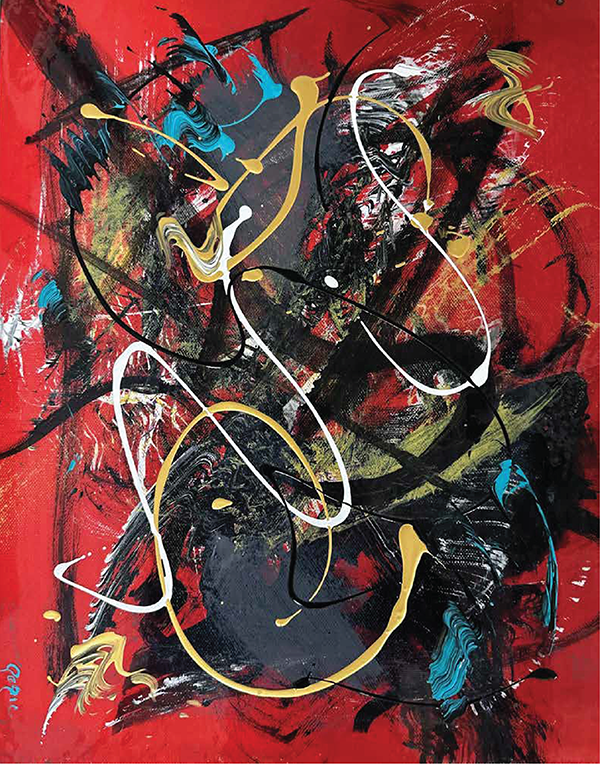
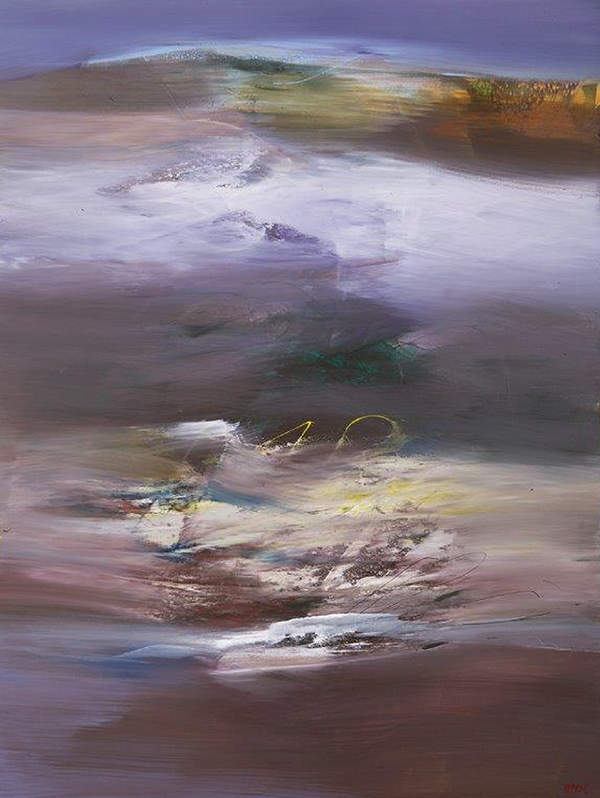
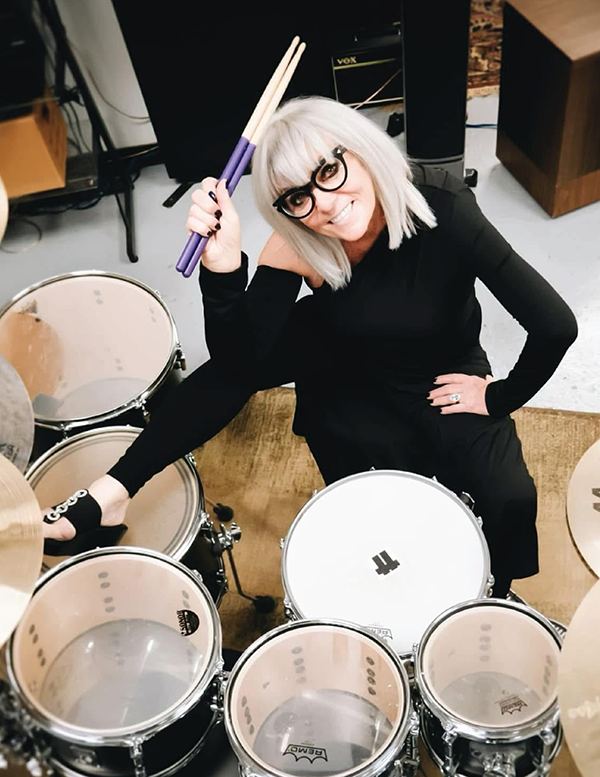
Even her exploration of music follows that same all-in pattern. Drumming has inspired a series of paintings—including a tribute to legendary Rush drummer Neil Peart—and she now studies behind the drum kit. She collaborates with Lotus 97.7 and trades art lessons for drumming instruction with her teacher.
The thread that ties it all together? She sums the magic of mastery up in four words: “Be and it is.”
Defining mastery in your life
Calling yourself a master is one thing. Feeling like one still takes some getting used to, no matter how many accolades she earns.
After all, mastery isn’t proven with awards. It’s in moments like the time someone approached her at an exhibition to ask, “Why do your paintings seem so dark?” An interesting question, Patricia thought. So, she explained: “For you or anyone to see or feel that darkness, it must have a comparable. … Only until you awaken to see that light will you then find the essence of the light in there.”
After they parted ways, Patricia discovered the wisdom stuck. “I had changed their perception of themselves, their perception of how they examine all things, recognizing that my paintings appeared dark, so they must see other things as dark.”
Her next steps on the path are bold ones, reaching beyond mastery into iconic presence. “I’m in the market to make a significant difference historically. I'm positioning myself, my story, the work I've done to be an example for other women who desire this type of career,” she says. “I’m recognizing I am not only an expert, but I am a master, and I am the only one who is doing what I'm doing. That has value.”
And she hopes her path to wisdom will help others see the value they offer as well. “It’s up to you, the individual, to master yourself first, so you are comfortable in what it is you've perfected.”
She is no longer a lone figure walking a misty road, like the figure in The Path. She’s leaving a trail others can follow.