
“I began to
understand that
being human is
enough.”
The Courage
to Remain
Human
BY AYESHA SHAH
People and Culture Executive, TEDx speaker, keynote and writer
SEPTEMBER 7, 2026
I have spent much of my life asking difficult questions about identity, freedom, meaning, love, and suffering.
What does it mean to live truthfully in a world that asks us to perform, prove, and become versions of ourselves we barely recognize?
For a long time, I thought the answers lived outside of me, in achievement, knowledge, usefulness, and certainty. But the deeper work was learning how to remain human.
Growing Up Between Contradictions
I was born in Pakistan and raised in Saudi Arabia. I am the only girl among four brothers, and from an early age, I learned that love and limitation could exist in the same room.
At home, my father encouraged me to think deeply. Outside the home, I saw freedoms available to others that were not available to me because I was female.
That contradiction shaped me. It made me attentive and observant to question what people called “normal”.
Even as a child, I resisted systems built on fear, shame, punishment, and control. I could not accept cruelty being explained away as culture, tradition, discipline, or protection.
Trying to Find the Answers
For years, I searched through achievement and intellect. I believed that if I learned enough, succeeded enough, and became useful enough, I could find certainty.
But achievement can be beautiful, and it can also become a hiding place.
I turned toward philosophy. I thought the great thinkers might have figured life out already. What I found instead was that the questions themselves were often the doorway.
Rumi’s Elephant in the Dark helped me see how easily we mistake one part of reality for the whole.
Philosophy gave me language for the questions. But poetry, story, beauty, and animals reached places logic alone could not.
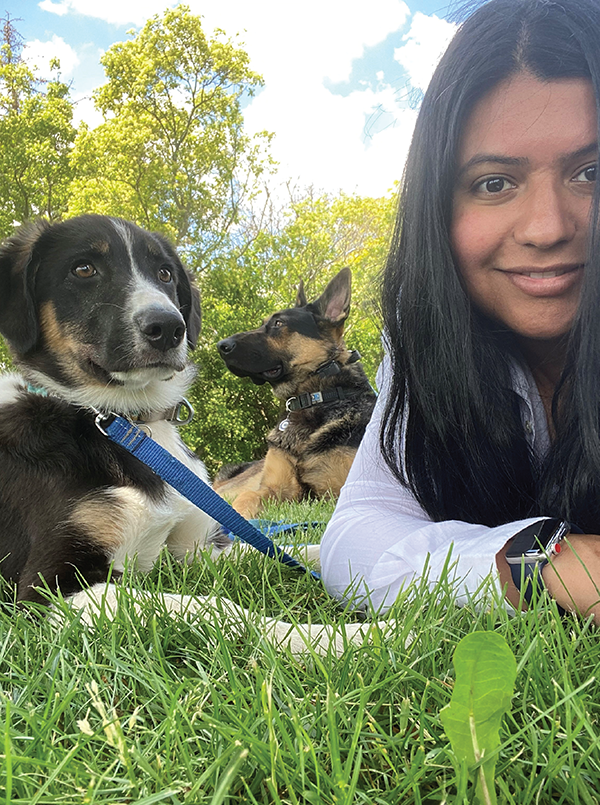
My relationships with animals taught me gentleness: to listen without words, build trust slowly, love without performance, and be present with honesty, patience, and tenderness.
That love softened me. It reminded me that being human is not a problem to solve, but an experience to enter with humility and care. What we create and contribute from this place is far more meaningful.
The Identities We Build
So many of us build identities around being useful, successful, capable,
needed, resilient, or strong. I certainly did.
At some point, I realized I had spent much of my life trying to earn my right to exist through achievement.
Underneath it, there was fear: fear of not being enough, losing value, being unseen, or not knowing who I was without what I produced.
Failure, loss, and uncertainty interrupt the identities we build. They ask us to meet ourselves without the armour.
Rumi’s The Road Home offers a beautiful invitation to loosen the limits of identity and find our way back to ourselves.
What Changed
For me, the shift happened slowly.
The question changed from “What if?” to “What now?”
What is true now? What can I meet with honesty now?
That shift did not make life easier. But it made it sweeter, and more honest.
It invited acceptance and compassion toward others and myself.
I stopped punishing myself for what I did not yet know.
I began to understand that being human is enough. Learning happens along the way, through love, failure, loss, courage, and ordinary living.
Mastery is a worthy pursuit. So is excellence. But there is a difference between stretching toward possibility and contorting ourselves around an external idea of perfection. Growth asks us to learn from our lives, not punish ourselves with guilt, shame, and self-loathing.
The Spark We Carry
I believe every human being carries something alive within them.
Something fierce, and tender. Creative and true.
Fear can bury it. Pain can harden it. The world can train us to mask it.
We perform certainty when uncertain. We appear strong when hurting. We leave parts of ourselves outside the door.
But the spark lives, even when dimmed. It waits.
Remaining connected to it is a form of courage.
Courage to stay open when life gives us reasons to shut down. The courage to belong to ourselves, even when the world rewards performance over presence.
What Leadership Means to Me Now
Leadership begins with meeting ourselves honestly: our brilliance, beauty, fears, conditioning, need for approval, desire for control, and temptation to confuse authority with truth.
The work is to become aware of our impact.
What matters now is meeting people beyond their roles, titles, and output, and building relationships rooted in honesty, dignity, reciprocity, and care.